eDNA testing for the presence of Great Crested Newts
Posted in:
Amphibians, Great Crested Newt, Ponds, Protected Species, Survey Methods
Date posted: 15 May 2016
Following a CPD session provided by the Freshwater Habitats Trust (FHT), Alar Ecology is now trained and equipped to provide an environmental DNA (eDNA) testing service to detect Great Crested Newts (GCNs) in ponds and other waterbodies. The introduction of this method, approved by Natural England, is set to make it much easier and less costly for developers and land managers who need to determine the presence (or absence) of this European Protected Species, especially where there is a requirement to survey a large number of ponds.
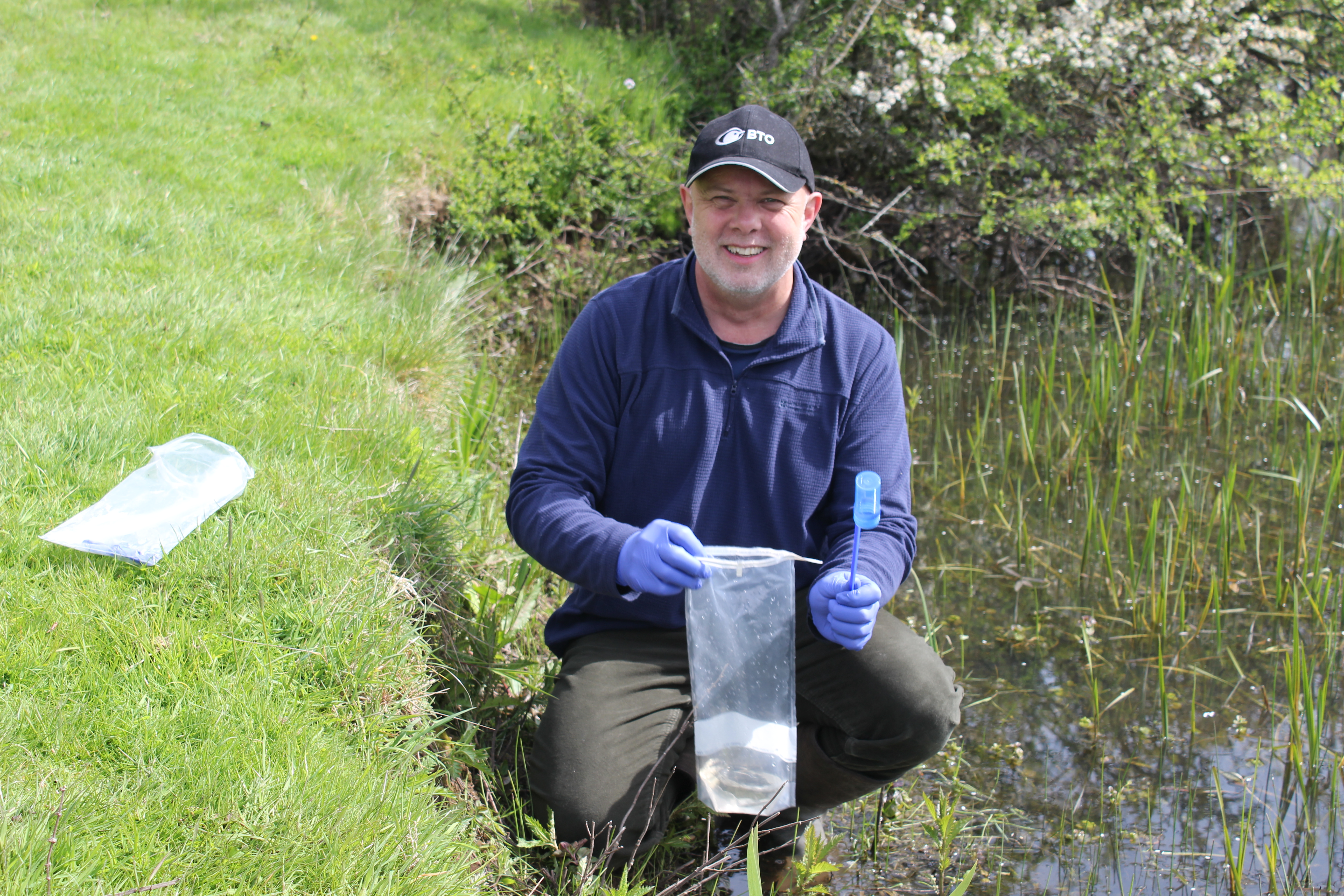
The use of environmental DNA testing kits makes it possible to detect GCNs during one visit to a pond, simply by taking water samples. These are then sent to an approved laboratory for analysis. Conventional surveying for GCNs requires repeat visits involving multiple techniques (including live trapping and egg searches) during the breeding season. This can be expensive and time-consuming as well as having animal welfare implications. Furthermore, research carried out by FHT shows that eDNA testing is more accurately confirms the presence or absence of GCNs than conventional survey methods.
Natural England will accept eDNA test results as evidence of the presence or absence of Great Crested Newts from ecological consultants, provided the methods set out in FHT’s technical advice note are strictly followed. These include procedures for avoiding contamination of samples.
However, while the new technique provides an additional option for ecologists undertaking GCN presence/absence surveys, conventional survey effort will still be required where presence is confirmed and there is a need to obtain an estimate of population size for licensing purposes.
Follow Alar Ecology: