Barn Owls and licensing
Posted in:
Barn Owl, Birds, Protected Species
Date posted: 1 March 2017
Barn Owl (Tyto alba) benefits from the basic legal protection afforded in England, Scotland and Wales to most wild birds by the Wildlife & Countryside Act (1981 as amended). However, they are also subject to additional legal protection from disturbance when they are breeding. For this reason, it is important for surveyors to know how they can proceed without breaking the law and which of the available licensing options is the most appropriate. The licensing system permits actions, such as disturbance, for certain specified reasons. Without a licence, such actions would be illegal.
Class Survey Licence (WML – CL29)
Natural England issues class licenses on an annual basis to trained, experienced surveyors. This licence permits registered persons (and other persons authorised to act on their behalf) to disturb nesting barn owls by observation in the course of undertaking presence/absence and distribution surveys – specifically, those that are intended to inform development proposals – subject to the following provisions:
- A Registered Person should only authorise an Accredited Agent if they can personally assure that the individual is appropriately experienced, skilled and competent to undertake activities under this licence.
- This licence may only be exercised when establishing the presence of nesting barn owl at a location. This includes entering any building to confirm actual breeding and the stage of that breeding.
- Registered Persons, Accredited Agents and Assistants must exercise the utmost care to avoid undue disturbance to barn owl and other species of wild bird, and in particular to avoid any action which might endanger breeding success.
A full list of the class licence terms and conditions, together with information and advice specific to the licence, can be found here.
Class licenses are only issued to appropriately experienced individuals who are suitably trained to undertake surveys competently. Users of this licence are required to consider the risks of activities to biosecurity and take relevant precautions when visiting sensitive habitats to avoid the spread of invasive, non-native species, and tree and plant pests and diseases.
Registered Persons are required to complete a report annually (including ‘nil’ returns), detailing the following information:
- Location (site name, description), county and a 6-figure (minimum) Ordnance Survey grid reference;
- Date(s) survey(s) undertaken; and
- Numbers of birds present at the site during the visit(s).
Anyone visiting a potential nesting site without a Class Survey Licence (or Schedule 1 Licence – see below) needs to exercise particular caution to avoid committing an offence. This is because barn owls have a long breeding season and have been recorded breeding in all months of the year, although most breeding activity (including the period when dependent young are reared) takes place between March and September.
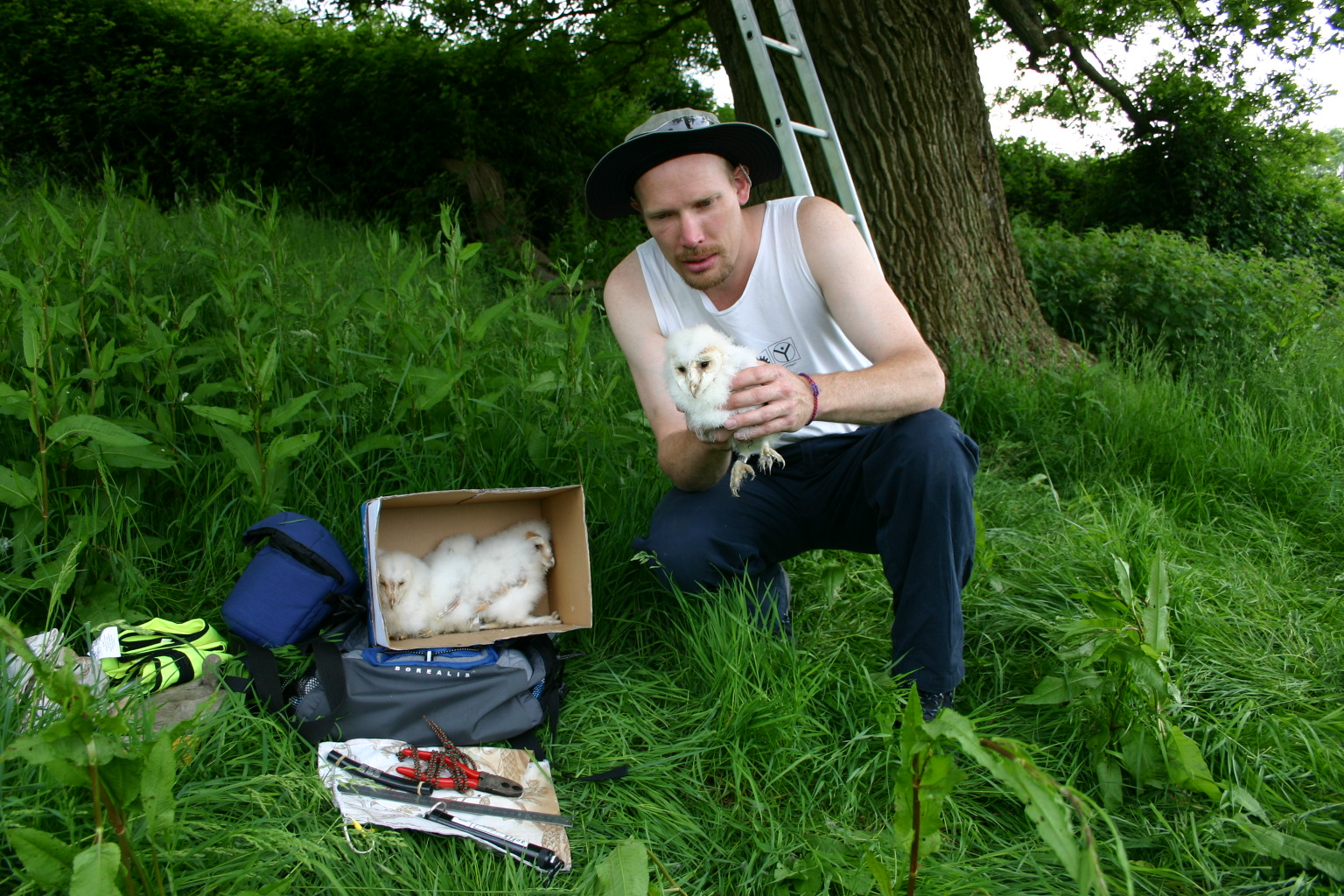
Barn owls are generally tolerant of disturbance at the chick-rearing stage. Visits to nesting sites during the incubation period should be avoided, however, due to the risk of desertion.
Schedule 1 Licence
Together with around 80 other species, barn owl is listed on Schedule 1 of the Wildlife and Countryside Act – “Birds which are protected by special penalties”. This makes it an offence to disturb barns owls during the breeding season, broadly the period that covers egg laying, incubation, rearing and when dependent young are still at or near the nest site.
Schedule 1 licenses for Barn Owl are issued by the British Trust for Ornithology (BTO) to experienced specialists for the purpose of monitoring nests and ringing adults and chicks at breeding sites.

Even if Barn Owls aren’t present at a roost or nest site, it’s often easy to tell if they’ve been there. For more information, see the link to The Barn Owl Trust website below.
Some useful links for Barn Owl nest boxes
- The Barn Owl Centre One stop Owl & Kestrel Nest Box Shop
- The Nest Box Company Owl Nest Boxes
- The Barn Owl Trust Nestboxes
Postscript – January 2018
The 2018 Class Survey Licence introduces some subtle changes worth noting. The Natural England website which provides the links to apply for and download the licence states that it (the licence) is … “To survey and monitor barn owl (Tyto alba) nest sites, for the purposes of monitoring the presence of the species and effectiveness of conservation efforts, including surveying sites to inform future development purposes”. Confusingly, it also goes on to state that the licence “doesn’t let you do … conservation work“. It would seem, however, that the Class Licence can be used for post-development monitoring as well as to inform future development. Although it is also clear that the licence only permits disturbance by passive observation. Checking of a nest box is permitted only when it is “… not in current use for breeding“.
Follow Alar Ecology: