Gleaning bats use acoustic shadows to detect insect prey
Posted in:
Bats, Biodiversity, Dormouse, Research
Date posted: 25 August 2015
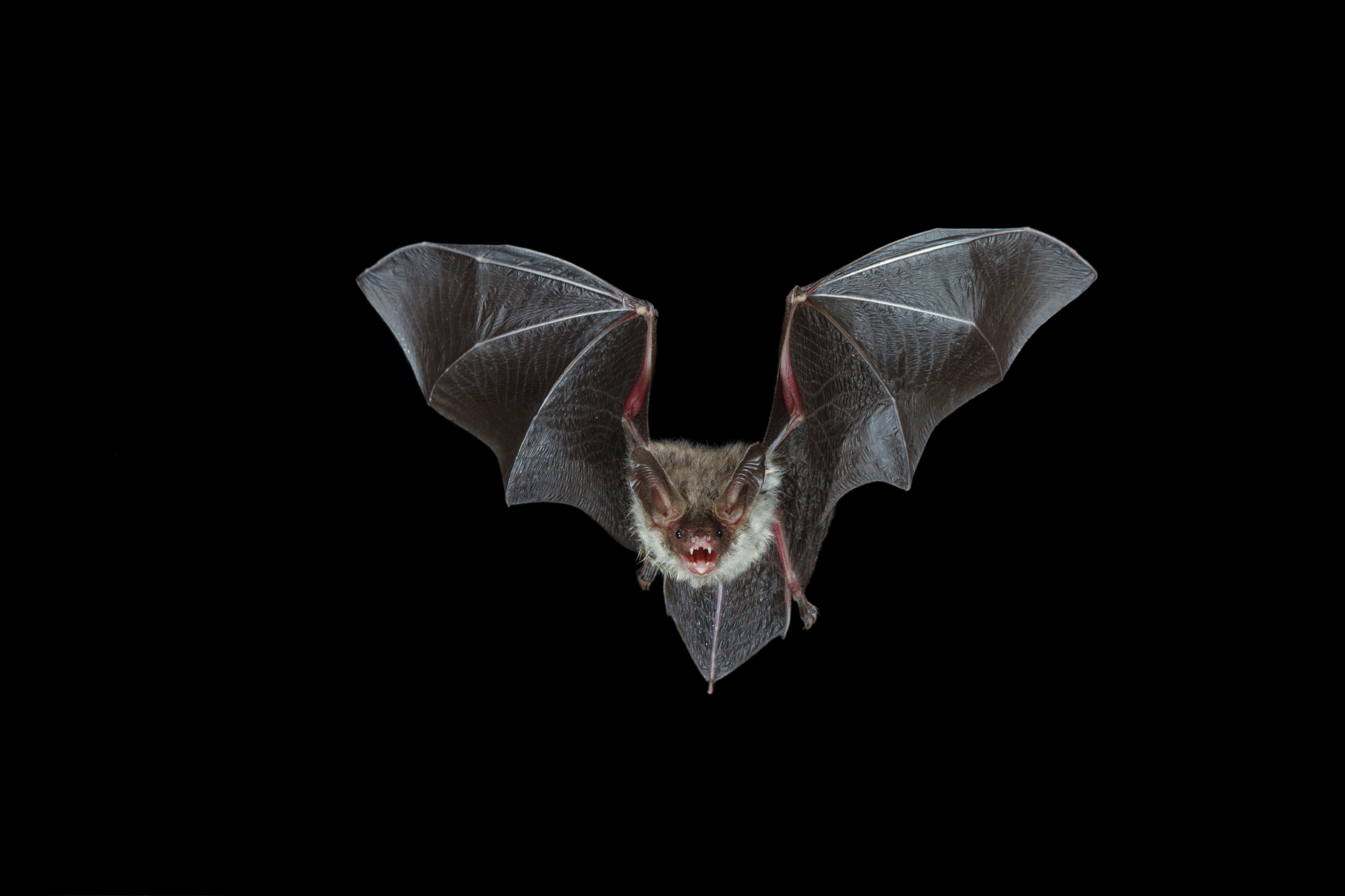 Scientists from QMUL and the University of Bristol have found that, instead of searching for prey directly, certain neotropical bat species utilise an intimate knowledge a their home environment. Gleaning bats create a highly detailed acoustic profile of individual leaves! When an insect lands on a familiar leaf, the normal echoes are interrupted. An “acoustic shadow” is created which provides a very strong signal to the hunting bat (previous studies had concluded that these bats must detect prey by sight, smell and sound).
The researchers also describe a new phenomenon of “acoustic camouflage”. This is employed by insect prey to elude hunting bats. It basically involves insects alighting on rough surfaces like bark where they are less easily detected.
More Information:
The paper entitled ‘Acoustic shadows help gleaning bats find prey, but may be defeated by prey acoustic camouflage on rough surfaces‘ by Clare, E and Holderied, M is published by eLife.
Abstract: Perceptual abilities of animals, like echolocating bats, are difficult to study because they challenge our understanding of non-visual senses. We used novel acoustic tomography to convert echoes into visual representations and compare these cues to traditional echo measurements. We provide a new hypothesis for the echo-acoustic basis of prey detection on surfaces. We propose that bats perceive a change in depth profile and an ‘acoustic shadow’ cast by prey. The shadow is more salient than prey echoes and particularly strong on smooth surfaces. This may explain why bats look for prey on flat surfaces like leaves using scanning behaviour. We propose that rather than forming search images for prey, whose characteristics are unpredictable, predators may look for disruptions to the resting surface (acoustic shadows). The fact that the acoustic shadow is much fainter on rougher resting surfaces provides the first empirical evidence for ‘acoustic camouflage’ as an anti-predator defence mechanism.
Watch a video of Dr Clare explaining her work with bats.
Image credit: Bechstein’s Bat © istockphotos.com/Faultier Stock photo ID:63509495
Follow Alar Ecology: