Dung beetles and ecosystem services
Posted in:
Bats, Conservation, Ecosystem Services, Invertebrates
Date posted: 6 April 2020
By Ian Morgan
Dung beetles play a crucial role in our ecosystem as well as in agriculture. They are an important source of prey for many bird and mammal species, including rare Greater Horseshoe bats (Jones at. al, 2015). But perhaps more critically, they provide a number of important ecosystem services, contributing to the maintenance of healthy pastures and soils. These include: dung disposal and burial; pest and parasite suppression; nutrient cycling; soil structure enhancement; and secondary seed dispersal. Additionally, they may help lower greenhouse gas emissions produced by livestock by aerating dung and lowering the amount of methane it produces in decomposition.
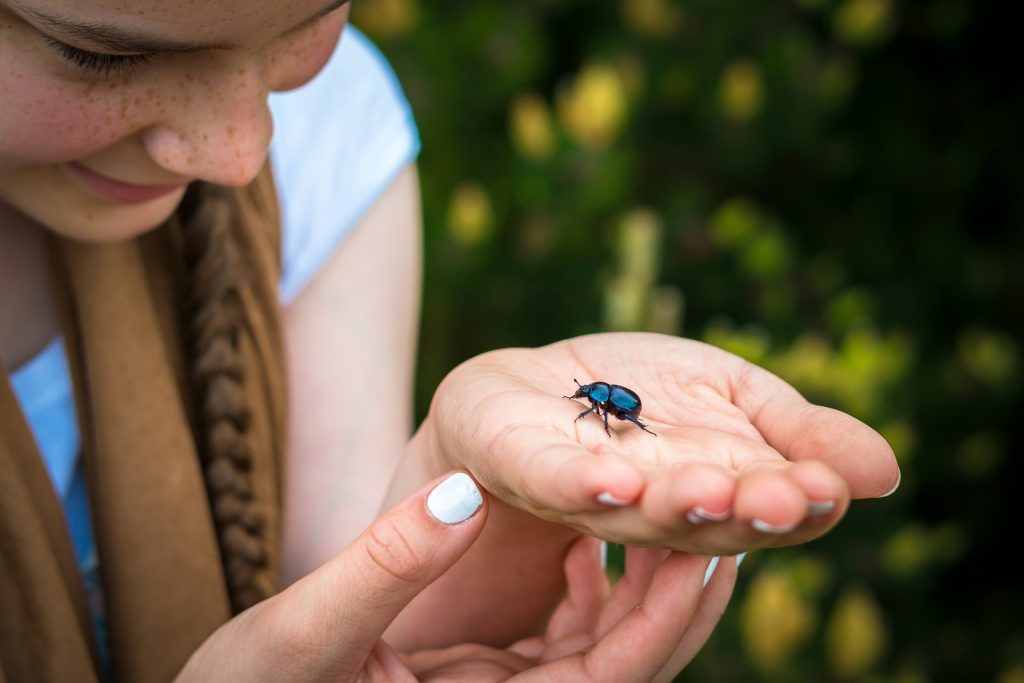
These ecosystem services have an enormous economic value, too. Beynon et al. (2015) calculate that dung beetles save the UK cattle industry alone £367 million each year, primarily by encouraging healthy grass growth.
Sadly, like many of our invertebrate species, dung beetles are in decline. One proposed explanation for this is the widespread use of anti-parasite livestock pharmaceuticals known as endectocides. Some endectocides are poorly metabolised by livestock and persist in dung as residues. In high concentrations, these residues can be deadly to non-target organisms – especially those reliant on the dung directly. When not directly lethal, they may negatively impact reproduction and development of such organisms. Furthermore, these residues have been shown to persist in the environment for significant periods of time. Interestingly, contaminated dung may preferentially attract or repel certain species of insect.
Evaluation of the risks involved in using these pharmaceuticals on non-target organisms such as dung beetles has suffered from a lack of standard methods in experimentation. This has led to an imprecise understanding of the issues at large.
A recent study published in Environmental Toxicology and Chemistry (Finch et. al, 2020) combines and analyses datasets from 22 studies in order to better understand the overall effect of endectocide residues on Aphodiine dung beetles (the subfamily to which the majority of UK species belong). The study assessed the effect of different endectocides on the occurrence (presence or absence) and abundance of individuals, with consideration given to both larval and adult life stages.
It was found that dung contaminated with endectocides was significantly more likely to have at least one adult Aphodiine beetle than uncontaminated dung. This strongly suggests the beetles are attracted to contaminated dung. At the same time, however, a significant negative relationship was reported between endectocide exposure and the total abundance of Aphodiine beetles (adults plus larvae), the effect being more pronounced in larvae than in adults. This indicates that even if adult dung beetles are observed within contaminated dung, survival rates for their offspring are considerably reduced when compared to uncontaminated dung.
Several endectocides were compared, broadly showing a similar trend of reduced abundance rates for both adults and larvae, with Ivermectin proving particularly toxic. Moxidectin appeared not to impact adult survival rates or ability of adults to reproduce, but did impact survival rates for larvae. All-in-all, the negative impact of such contaminants in dung seems clear.
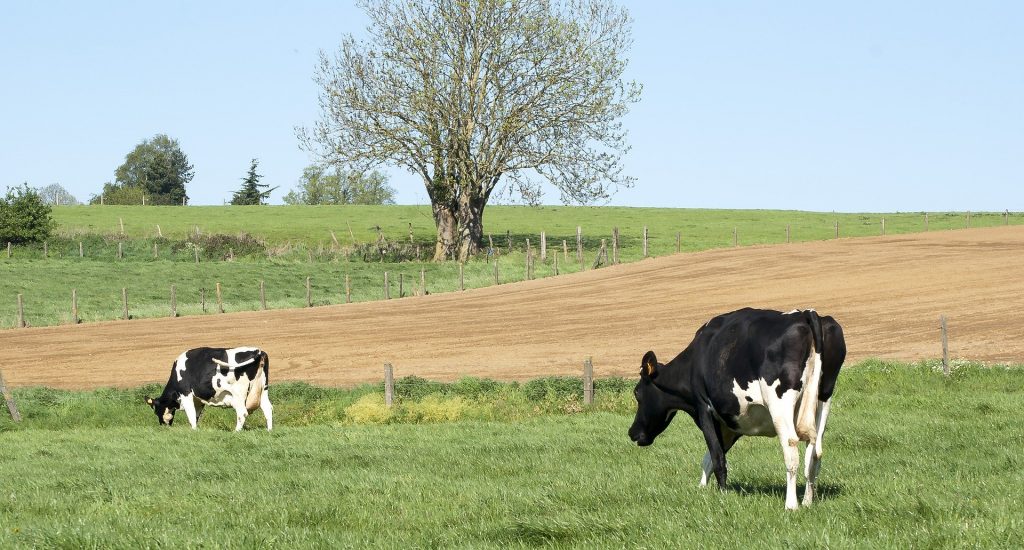

The combined effect of contaminated dung being attractive to Aphodiine beetles, whilst being detrimental or deadly to their offspring ,was highlighted as having potential to “snow-ball” and result in decimation of local populations exposed to dung contamination. The study calls for a more measured approach in the use of such pharmaceuticals. This suggestion would appear to be bolstered by the steady increase in resistance to such drugs by target organisms (parasites). Restraint in administering drugs to livestock, therefore, will not only benefit wildlife, but slow the increase in resistance of target organisms.
References:
Beynon SA, Wainwright WA & Christie M (2015). The application of an eco-
system services framework to estimate the economic value of dung beetles to the UK cattle industry. Ecol Entomol 40:124–135.
Finch D, Schofield H, Floate KD, LKubasiewicz LM & Mathews F (2020). Implications of Endectocide Residues on the Survival of Aphodiine Dung Beetles: A Meta‐Analysis. Environmental Toxicology and Chemistry.
https://doi.org/10.1002/etc.4671
Jones G, Barlow K, Ransome R & Gilmour L (2015). Greater horseshoe bats and their insect prey: the impact and importance of climate change and agri-environment schemes. Final report to PTES. https://tinyurl.com/y7atkk64
Useful links:
British Dung Beetles: https://tinyurl.com/y9w8ob66
Dung Beetle Mapping Project (DUMP): https://dungbeetlemap.wordpress.com/
Follow Alar Ecology: