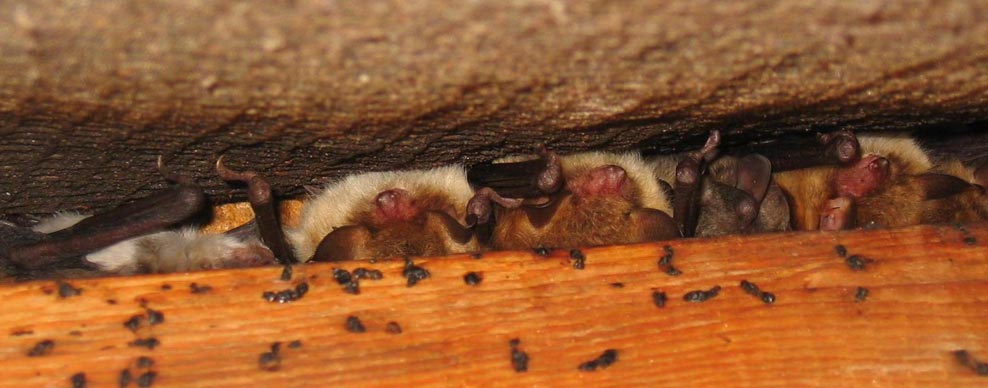
The bat surveys offered by Alar Ecology are designed to comply with recommendations published by the Bat Conservation Trust and other guidance documents. These recognise the strict protection afforded to all bat species in the UK and the potential difficulties that arise when bats are present at a development site. Collecting a full set of data ensures that impacts can be properly assessed and mitigation set at an appropriate level. It also increases the probability that a licence to enable development will be obtained. Bat surveys generally fall into the following categories:
- Roost surveys of buildings, bridges, trees or any structure with the potential to support roosting bats. For buildings, a roost survey involves both internal and external inspections, looking for evidence of roosting bats or potential for roosting bats to be present. Following an initial inspection, which may require the use of specialist equipment such as endoscopes and thermal imaging, surveys are typically conducted at dusk and dawn to count bats leaving a roost or returning to it.
- Activity surveys involve the recording of foraging and commuting bats away from their roost sites, using both static (automated) survey methods, or data collected manually from walked or driven transects and/or point counts.
All bat surveys undertaken by Alar Ecology are carried out by experienced and licensed surveyors. Specialist equipment is used, including AnaBat© detectors and software for recording and analysing bat data.


